

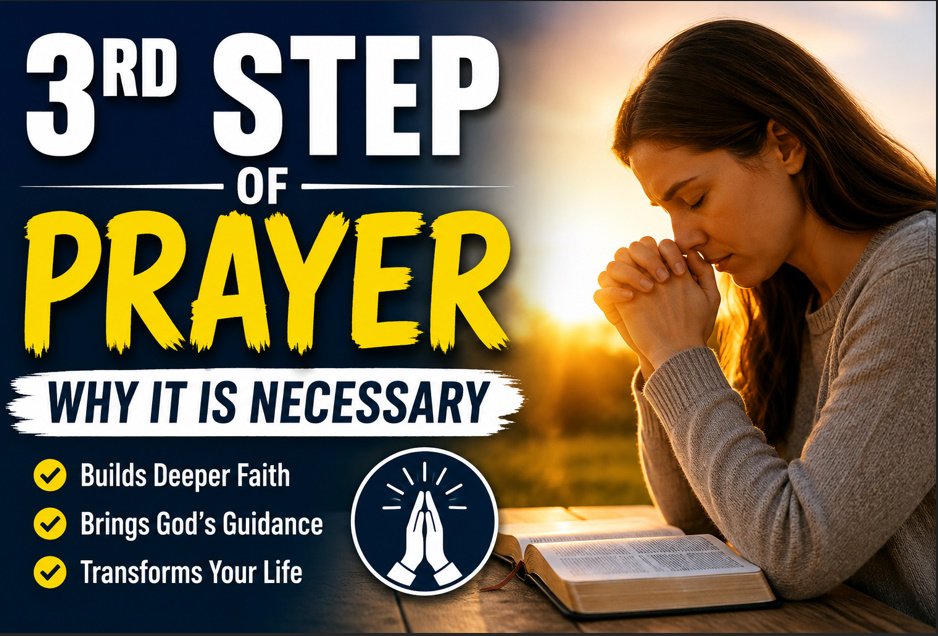
What Is the 3rd Step of Prayer?
Prayer is a personal conversation with God that helps believers grow in faith, seek guidance, and express gratitude. Many churches and prayer guides describe prayer in multiple steps to help people pray with greater focus. The 3rd step of prayer is commonly understood as a stage of deeper trust, surrender, or listening to God, depending on the prayer method being followed.
Rather than simply asking for blessings, this step encourages believers to develop a closer relationship with God by opening their hearts to His direction and wisdom.
Key ideas of the 3rd step include:
- Trusting God’s plan.
- Listening with humility.
- Surrendering personal desires.
- Seeking spiritual wisdom.
- Growing in faith every day.
Why the 3rd Step of Prayer Matters
The 3rd step of prayer helps move believers beyond routine words into meaningful spiritual communication. It reminds us that prayer is not only about speaking but also about allowing God to shape our thoughts, attitudes, and decisions.
By practicing this step consistently, Christians often experience greater peace, stronger faith, and increased confidence in God’s timing.
Benefits include:
- A deeper relationship with God.
- Greater emotional peace.
- Increased patience.
- Stronger spiritual confidence.
- Better decision-making through prayer.
Biblical Principles That Support the 3rd Step
Although different traditions organize prayer differently, the Bible consistently teaches believers to trust God, seek His will, and remain faithful in prayer. Scripture encourages Christians to pray with sincerity, humility, and perseverance.
These principles remind believers that prayer is not simply about receiving answers but also about growing spiritually and aligning their lives with God’s purpose.
Biblical themes include:
- Trust in God’s wisdom.
- Faith during difficult times.
- Humility before God.
- Gratitude for His blessings.
- Patience while waiting for answers.
How to Practice the 3rd Step of Prayer
Applying the 3rd step of prayer does not require special words or lengthy prayers. Instead, it involves approaching God with honesty, faith, and a willingness to follow His guidance.
Simple daily habits can make this step a natural part of your spiritual routine.
Practical ways to practice:
- Find a quiet place to pray.
- Read a passage from the Bible first.
- Spend time in silent reflection.
- Pray with an open and sincere heart.
- End your prayer by trusting God’s will.
- Keep a prayer journal to record your spiritual journey.
Common Challenges During the 3rd Step
Many believers struggle with distractions, impatience, or uncertainty while praying. These challenges are normal and can be overcome through consistent practice and faith.
Remember that spiritual growth often happens gradually. Staying committed to prayer, even when answers seem delayed, helps strengthen your relationship with God.
Challenges may include:
- Difficulty concentrating.
- Expecting immediate answers.
- Feeling discouraged.
- Losing consistency.
- Doubting God’s timing.
Conclusion
The 3rd step of prayer is an important part of developing a deeper and more meaningful relationship with God. Whether it emphasizes trust, surrender, or listening, this stage encourages believers to rely on God’s wisdom rather than their own understanding.
By practicing the 3rd step regularly, Christians can experience greater spiritual maturity, renewed hope, and lasting peace. Consistent prayer, combined with faith and patience, helps build a stronger foundation for everyday life and brings believers closer to God’s purpose.